Fighter
All classes · Multiclassing · Rules Glossary
Core Fighter Traits
| Primary Ability | Strength or Dexterity |
|---|---|
| Hit Point Die | D10 per Fighter level |
| Saving Throw Proficiencies | Strength and Constitution |
| Skill Proficiencies | Choose 2: Acrobatics, Animal Handling, Athletics, History, Insight, Intimidation, Persuasion, Perception, or Survival |
| Weapon Proficiencies | Simple and Martial weapons |
| Armor Training | Light, Medium, and Heavy armor and Shields |
| Starting Equipment | Choose A, B, or C: (A) Chain Mail, Greatsword, Flail, 8 Javelins, Dungeoneer's Pack, and 4 GP; (B) Studded Leather Armor, Scimitar, Shortsword, Longbow, 20 Arrows, Quiver, Dungeoneer's Pack, and 11 GP; or (C) 155 GP |
Becoming a Fighter ...
As a Level 1 Character
- Gain all the traits in the Core Fighter Traits table.
- Gain the Fighter's level 1 features, which are listed in the Fighter Features table.
As a Multiclass Character
- Gain the following traits from the Core Fighter Traits table: Hit Point Die, proficiency with Martial weapons, and training with Light and Medium armor and Shields.
- Gain the Fighter's level 1 features, which are listed in the Fighter Features table.
Fighter Class Features
As a Fighter, you gain the following class features when you reach the specified Fighter levels. These features are listed on the Fighter Features table.
Fighter Features
| Level | Proficiency Bonus | Class Features | Second Wind | Weapon Mastery |
|---|---|---|---|---|
| 1 | +2 | Fighting Style, Second Wind, Weapon Mastery | 2 | 3 |
| 2 | +2 | Action Surge (one use), Tactical Mind | 2 | 3 |
| 3 | +2 | Fighter Subclass | 2 | 3 |
| 4 | +2 | Ability Score Improvement | 3 | 4 |
| 5 | +3 | Extra Attack, Tactical Shift | 3 | 4 |
| 6 | +3 | Ability Score Improvement | 3 | 4 |
| 7 | +3 | Subclass feature | 3 | 4 |
| 8 | +3 | Ability Score Improvement | 3 | 4 |
| 9 | +4 | Indomitable (one use), Tactical Master | 3 | 4 |
| 10 | +4 | Subclass feature | 4 | 5 |
| 11 | +4 | Two Extra Attacks | 4 | 5 |
| 12 | +4 | Ability Score Improvement | 4 | 5 |
| 13 | +5 | Indomitable (two uses), Studied Attacks | 4 | 5 |
| 14 | +5 | Ability Score Improvement | 4 | 5 |
| 15 | +5 | Subclass feature | 4 | 5 |
| 16 | +5 | Ability Score Improvement | 4 | 6 |
| 17 | +6 | Action Surge (two uses), Indomitable (three uses) | 4 | 6 |
| 18 | +6 | Subclass feature | 4 | 6 |
| 19 | +6 | Epic Boon | 4 | 6 |
| 20 | +6 | Three Extra Attacks | 4 | 6 |
Level 1: Fighting Style
You have honed your martial prowess and gain a Fighting Style feat of your choice (see "Feats"). Defense is recommended.
Whenever you gain a Fighter level, you can replace the feat you chose with a different Fighting Style feat.
Level 1: Second Wind
You have a limited well of physical and mental stamina that you can draw on. As a Bonus Action, you can use it to regain Hit Points equal to 1d10 plus your Fighter level.
You can use this feature twice. You regain one expended use when you finish a Short Rest, and you regain all expended uses when you finish a Long Rest.
When you reach certain Fighter levels, you gain more uses of this feature, as shown in the Second Wind column of the Fighter Features table.
Level 1: Weapon Mastery
Your training with weapons allows you to use the mastery properties of three kinds of Simple or Martial weapons of your choice. Whenever you finish a Long Rest, you can practice weapon drills and change one of those weapon choices.
When you reach certain Fighter levels, you gain the ability to use the mastery properties of more kinds of weapons, as shown in the Weapon Mastery column of the Fighter Features table.
Level 2: Action Surge
You can push yourself beyond your normal limits for a moment. On your turn, you can take one additional action, except the Magic action.
Once you use this feature, you can't do so again until you finish a Short or Long Rest. Starting at level 17, you can use it twice before a rest but only once on a turn.
Level 2: Tactical Mind
You have a mind for tactics on and off the battlefield. When you fail an ability check, you can expend a use of your Second Wind to push yourself toward success. Rather than regaining Hit Points, you roll 1d10 and add the number rolled to the ability check, potentially turning it into a success. If the check still fails, this use of Second Wind isn't expended.
Level 3: Fighter Subclass
You gain a Fighter subclass of your choice. The Champion subclass is detailed after this class's description. A subclass is a specialization that grants you features at certain Fighter levels. For the rest of your career, you gain each of your subclass's features that are of your Fighter level or lower.
Level 4: Ability Score Improvement
You gain the Ability Score Improvement feat (see "Feats") or another feat of your choice for which you qualify. You gain this feature again at Fighter levels 6, 8, 12, 14, and 16.
Level 5: Extra Attack
You can attack twice instead of once whenever you take the Attack action on your turn.
Level 5: Tactical Shift
Whenever you activate your Second Wind with a Bonus Action, you can move up to half your Speed without provoking Opportunity Attacks.
Level 9: Indomitable
If you fail a saving throw, you can reroll it with a bonus equal to your Fighter level. You must use the new roll, and you can't use this feature again until you finish a Long Rest.
You can use this feature twice before a Long Rest starting at level 13 and three times before a Long Rest starting at level 17.
Level 9: Tactical Master
When you attack with a weapon whose mastery property you can use, you can replace that property with the Push, Sap, or Slow property for that attack.
Level 11: Two Extra Attacks
You can attack three times instead of once whenever you take the Attack action on your turn.
Level 13: Studied Attacks
You study your opponents and learn from each attack you make. If you make an attack roll against a creature and miss, you have Advantage on your next attack roll against that creature before the end of your next turn.
Level 19: Epic Boon
You gain an Epic Boon feat (see "Feats") or another feat of your choice for which you qualify. Boon of Combat Prowess is recommended.
Level 20: Three Extra Attacks
You can attack four times instead of once whenever you take the Attack action on your turn.
Fighter Subclass: Champion
Pursue Physical Excellence in Combat
A Champion focuses on the development of martial prowess in a relentless pursuit of victory. Champions combine rigorous training with physical excellence to deal devastating blows, withstand peril, and garner glory. Whether in athletic contests or bloody battle, Champions strive for the crown of the victor.
Level 3: Improved Critical
Your attack rolls with weapons and Unarmed Strikes can score a Critical Hit on a roll of 19 or 20 on the d20.
Level 3: Remarkable Athlete
Thanks to your athleticism, you have Advantage on Initiative rolls and Strength (Athletics) checks.
In addition, immediately after you score a Critical Hit, you can move up to half your Speed without provoking Opportunity Attacks.
Level 7: Additional Fighting Style
You gain another Fighting Style feat of your choice.
Level 10: Heroic Warrior
The thrill of battle drives you toward victory. During combat, you can give yourself Heroic Inspiration whenever you start your turn without it.
Level 15: Superior Critical
Your attack rolls with weapons and Unarmed Strikes can now score a Critical Hit on a roll of 18-20 on the d20.
Level 18: Survivor
You attain the pinnacle of resilience in battle, giving you these benefits.
Defy Death. You have Advantage on Death Saving Throws. Moreover, when you roll 18-20 on a Death Saving Throw, you gain the benefit of rolling a 20 on it.
Heroic Rally. At the start of each of your turns, you regain Hit Points equal to 5 plus your Constitution modifier if you are Bloodied and have at least 1 Hit Point.
Fighter Subclass: Spartan
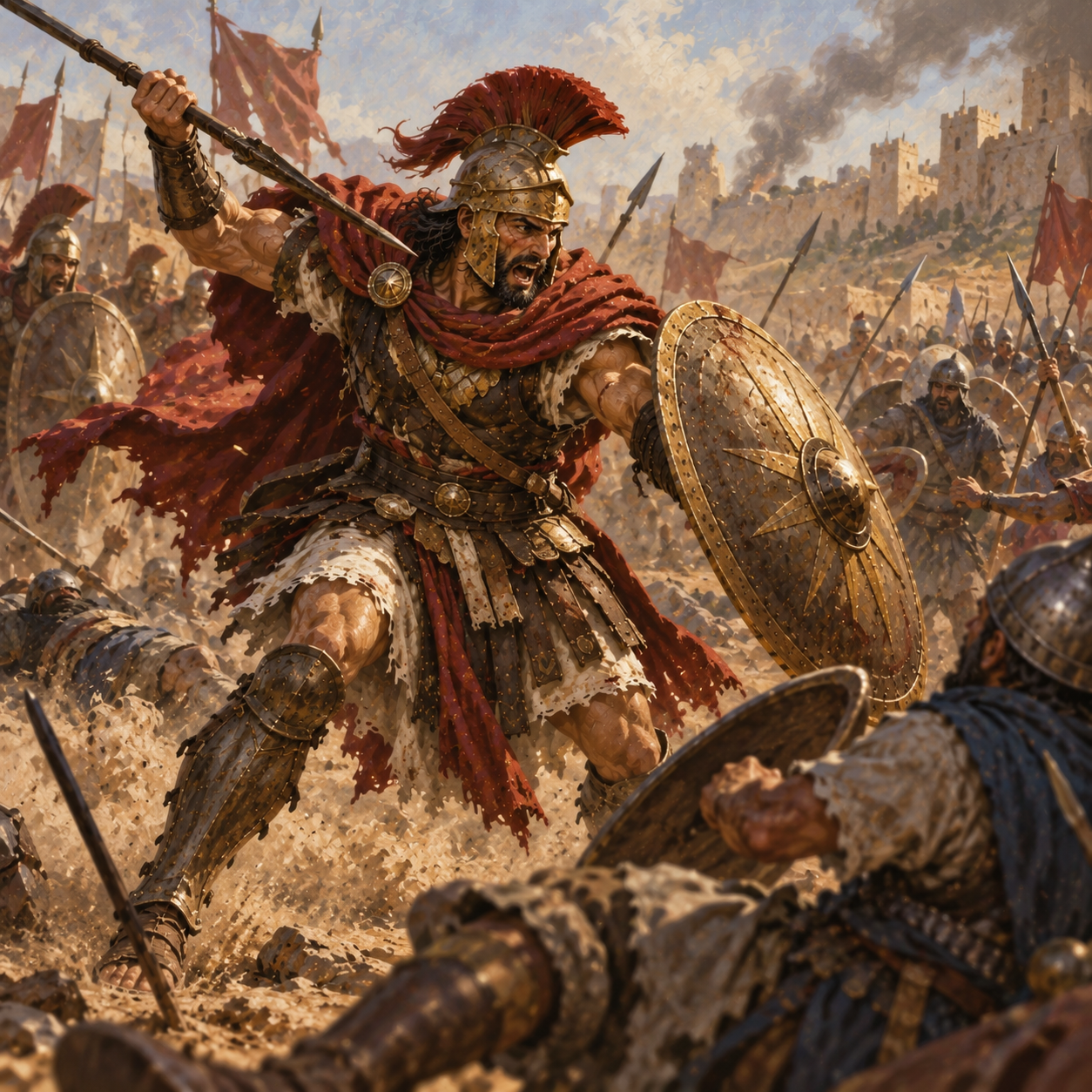
Mortally wounded and seeing that his soldiers are overwhelmed, King Agis commands his men to retreat. Rising to his knees, he holds the enemy back to give his people time to reach safety. One against many, King Agis dies the death of a true Spartan.
Cynisca steps into the grand arena of the Olympic games to sounds of laughter and jeering. It does not bother her that no woman has ever won an Olympic event before. She is not intimidated by the men she will be competing against. She is Spartan.
A traveling merchant turns to leave the city of Sparta. "By the way," he stops to ask King Agesilaus, "why is it that Sparta does not have walls like the other great cities-" King Agesilaus smirks and points to a group of young Spartans lifting weights in the courtyard. "These are Sparta's walls."
The Spartans were once considered the greatest warriors on the planet. For some cultures war interrupted their way of life; to Spartans, war was their way of life. From an early age both girls and boys were required to undergo military and athletic training. Because of their rigorous physical training and their advanced military tactics, Spartans quickly became renowned for their ability to overcome staggering odds.
However, as the war between Rome and Parthia escalates, the Spartans find themselves out of the military spotlight for the first time. Having no allegiance to either side of the conflict, most Spartans now earn their living as mercenaries and adventurers. Given Sparta's reputation for swift and effective violence, many nobles and upper class merchants will pay a high price to have even one Spartan on their personal security team.
Subclass Progression
| Level | Feature |
|---|---|
| 3rd | Shield Combatant |
| 7th | Phalanx |
| 10th | Battle Cry |
| 15th | Ferocity in Battle |
| 18th | Valor in Death |
Level 3: Shield Combatant
When you choose this archetype at 3rd level, you have mastered the Spartan's trademark weapon. No piece of equipment was more valuable to the Spartan military strategy than the shield, as it protected not on the wielder but also the soldier to their left. You gain the following benefits while you are wielding a shield:
- One creature of your choice within 5 feet of you gains a bonus to its AC equal to your shield's AC bonus.
- As a Bonus Action, you can make a melee attack with your shield against one creature within 5 feet. You are proficient with this attack, and you use Strength for its attack and damage rolls. On a hit, the target takes 1d4 + your Strength modifier Bludgeoning damage. You can then attempt to shove that target using the Shove option of Unarmed Strike, including its size limit and saving throw (DC 8 + your Strength modifier + your Proficiency Bonus), without taking another action. If you have the Shield Master feat, the damage die becomes a d6.
Level 7: Phalanx
At 7th level you have completed your training in the Spartan art of the "phalanx." By working as a team, Spartans know how to protect one another, and stop the enemy in their tracks. You gain the following benefits:
- You can now protect one additional creature with your shield. Up to two creatures of your choice within 5 feet of you gains a bonus to its AC equal to your shield's AC bonus.
- When you successfully Shove a creature with your Shield Bash, the creature's speed is reduced by 10 feet for the rest of the turn.
Level 10: Battle Cry
At 10th level, you learn how to inspire courage in your companions, calling them to face danger as Spartans do. As a bonus action, you let out a Spartan battle cry to rally your allies. Any number of other creatures (not including you) of your choice within 60 feet of you that can hear you gain the following benefits until the start of your next turn:
- Advantage on Charisma and Wisdom saving throws.
- Advantage on all attack rolls.
- Immunity to being Frightened or Charmed. If the creature is already Frightened or Charmed, the condition ends for the creature.
These effects fade at the start of your next turn. Once you use this feature, you cannot use it again until you finish a long rest.
Level 15: Ferocity in Battle
At 15th level, your skill in battle becomes perfection. When you would roll damage for a melee weapon attack, you may forgo rolling and use the maximum number for your damage dice. Once you have used this feature, you cannot use it again until you finish a long or short rest.
Level 18: Valor in Death
Beginning at 18th level, being reduced to 0 hit points does not cause you to fall unconscious. You must still make death saving throws and you still suffer the effects of taking damage while at 0 hit points. However, you may move and take actions as normal on your turn until you fail your third death save, at which point you finally die.
Lore: Spartans in the Bible
From slavery in Egypt to war with Babylonia, the Jewish people faced many powerful enemies in the Bible, but the one nation that seems to have always been their ally was Sparta. The book of Maccabees records an exchange of letters between the Jewish high priest, Jonathan, and the King of Sparta, Arius. As the region of Judea is under attack, Jonathan writes to request aid from Arius. The Spartans agree, saying in their return letter: "we are brothers and are of the family of Abraham."
Although they did not share the same faith, it is recorded that the Jews would offer prayers at the temple for the Spartans, and the Spartans likewise always came the aid of Jerusalem in times of conflict. On one occasion, the king of an invading army warned Sparta not to interfere with his invasion, writing in a letter, "if we are victorious, you will be slaves forever." The Spartans replied with a letter that contained only one word: "If."
Fighter Subclass: Commando
Wielding weapons and tactics that may seem unusual or otherworldly to more “traditional” adventurers, the Commando is a new breed of fighter. Gone are the days when armies would line up and charge at each other with swords drawn. With the advancement of technology and increased cooperation between nations came a more complex kind of warfare. Commandos are trained to perform in extreme and unpredictable situations, such as the extraction of hostages, the assassination of a terrorist leader, or the securing of a high-value asset.
Because they operate in situations that include innocent bystanders as well as hostile forces, a Commando must be incredibly disciplined and well-trained: able to recognize the difference between a hostage and a hostile with surgical precision. Commandos are used to operating in teams where each member of the team holds a certain specialty. From the sharpshooter to the artillerist to the demolitions expert, each Commando may have a very different set of skills, but what they all share in common is an unwavering faith in each other’s abilities to get the job done, no matter the obstacles.
In some ways, Commandos are ideally suited for combat in the Veil. Since they have spent their lives training to perform in unpredictable environments against unknown enemies, the concept of fighting demons in another plane of existence is just another day at the office for them. The Commando is team-oriented, and knows better than to take on the forces of darkness alone. Their first priority will be finding a new group of adventurers who can function well as a team.
Level 3: Firearm Proficiency
Starting when you choose this archetype at 3rd level, you gain proficiency in firearms.
Level 3: Weapon Specialty
It takes years of training to use some weapons effectively. As a Commando, you have access to a list of specialty weapons that other fighters do not, but in order to use one of these weapons you must first “specialize” in its use. When you gain this feature at 3rd level, you gain two Weapon Specialties of your choice (See “Specialty Weapons” below).
You gain an additional Weapon Specialty of your choice when you reach certain levels in this class: 7th, 10th, 15th, and 18th level. Each time you gain a new Weapon Specialty, you also have the option to replace an existing Specialty you have with a new one.
Weapon Cost
Once a player character gains a Weapon Specialty, it is up to the GM how the player character acquires the weapon and ammunition. If you are using the Commando in a modern setting, then the weapon and ammunition may be purchased from a merchant (using the costs listed in the Weapon Specialty Table), or “discovered” at the end of an encounter. However, for this campaign (which does not use currency), it is recommended to simply allow the character to “conjure” a new weapon as described in the “Manipulating Reality” sidebar on page 8.
Level 3: Tactical Stance
Starting at 3rd level, when a hostile creature’s movement provokes an opportunity attack from you, you may choose to use your reaction to make a ranged weapon attack instead of a melee weapon attack against the provoking creature.
Level 7: Adaptive Tactics
Starting at 7th level, your Specialty Weapons count as magical for the purpose of overcoming resistance and immunity to nonmagical attacks and damage.
Level 10: Situational Awareness
By 10th level, your training allows you to instinctively recognize the presence of danger. You gain the following benefits as long as you are not incapacitated.
- Being surprised does not impose Disadvantage on your Initiative roll.
- Whenever you make a Wisdom (Perception) check to look for danger, treat a roll of 7 or lower on the d20 as an 8.
Level 15: Careful Aim
When you reach 15th level, you can discern friend from foe in fractions of a second, and you can react accordingly. When you force creatures in a certain area to make a saving throw, such as with an automatic rifle’s “Burst” property or a fragmentation grenade’s explosive radius, you can avoid damaging friendly creatures inside of the weapon’s area of effect. Choose a number of creatures up to your Dexterity modifier (minimum of one creature). A chosen creature takes no damage from your weapon, but must still make a saving throw to avoid other effects, such as becoming stunned or poisoned.
Level 18: Vigilant Tactics
Starting at 18th level, when you are in combat, you gain the following benefits:
- Creatures provoke opportunity attacks from you if they move more than 5 feet while within your weapon’s normal range.
- You gain an additional reaction each round that may only be used to make an opportunity attack. This allows you to take up to two reactions per round of combat, but only one per turn.
Weapon Properties
Modern firearms and explosives are handled using the standard mechanics of Fifth edition. Unless otherwise stated, firearms are treated as ranged weapons, use Dexterity for determining attack and damage rolls, and otherwise follow all the standard rules of combat. If a weapon or ability causes a creature to make a saving throw, the DC for the saving throw is equal to 8 + your Dexterity Modifier + your Proficiency Bonus. Specialty Weapons in this section are also subject to the following properties.
Ammunition. The ammunition of a firearm is destroyed upon use. For practical purposes, assume that each weapon uses its own unique kind of ammunition.
Burst Fire. A weapon that has the burst fire property can make ranged weapon attacks as normal, or (as an action) it can spray a 10-foot-cube area within normal range with shots. Each creature in that area must succeed on a Dexterity saving throw or take the weapon’s normal damage. This action uses ten pieces of ammunition.
Reload. A limited number of attacks can be made with a weapon that has the reload property. Once this ammunition is expended, the weapon must then be reloaded using an action or bonus action (the character’s choice). A character is limited by the amount of ammunition held by a weapon, regardless of the number of attacks they can normally make on their turn.
Special. A weapon with the special property has unusual rules governing its use, explained in the text below the table in which it appears.
Specialty Weapons
The Weapon Specialty feature allows you to gain Weapon Specialties at certain levels. The options available to you depend on your fighter level, and are shown in the table below.
Weapon Specialty Table
| Fighter Level | Specialty Weapon | Damage Dice | Properties | Weapon Cost | Ammo Cost |
|---|---|---|---|---|---|
| 3 | Combat Pistol | 2d6 | Ammunition (range 50/150), Light, Reload (15), Special | 50 gp | 1 gp (15) |
| 3 | Grenade (Gas) | -- | Thrown (range 60), Special | -- | 25 gp (1) |
| 3 | Light Carbine | 2d6 | Ammunition (range 50/240), Burst Fire, Reload (30), Two-handed | 200 gp | 1 gp (10) |
| 3 | Silenced Pistol | 2d4 | Ammunition (range 50/150), Light, Reload (15), Special | 75 gp | 1 gp (15) |
| 7 | Automatic Rifle | 2d8 | Ammunition (range 50/240), Burst Fire, Reload (30), Two-handed | 300 gp | 1 gp (10) |
| 7 | Grenade (Fragmentation) | 5d8 | Thrown (range 60), Special | -- | 50 gp (1) |
| 7 | Precision Rifle | 2d8 | Ammunition (range 120/360), Reload (5), Special, Two-handed | 350 gp | 1 gp (10) |
| 7 | Shotgun | 2d8 | Ammunition (range 30/90), Reload (6), Special, Two-handed | 275 gp | 2 gp (10) |
| 7 | Stun Gun | -- | Ammunition (range 35), Light, Reload (1), Special | 60 gp | 2 gp (10) |
| 10 | Breach Charge | -- | Special | -- | 300 gp (1) |
| 10 | Flamethrower | 8d8 | Reload (1), Special, Two-handed | 525 gp | 150 gp (1) |
| 10 | Grenade (Stun) | -- | Thrown (range 60), Special | -- | 125 (1) |
| 10 | Sniper Rifle | 2d10 | Ammunition (range 360/1000), Reload (5), Special, Two-handed | 750 gp | 2 gp (10) |
| 15 | Anti-Material Rifle (AMR) | 5d6 | Ammunition (range 360/1000), Reload (5), Special, Two-handed | 1,000 gp | 4 gp (10) |
| 15 | Automatic Shotgun | 4d8 | Ammunition (range 30/90), Burst Fire, Reload (20), Special, Two-handed | 875 gp | 2 gp (10) |
| 15 | Heavy Machine Gun | 2d12 | Ammunition (range 50/240), Burst Fire, Reload (100), Two-handed | 1,500 gp | 3 gp (10) |
| 15 | Tranquilizer Rifle | -- | Ammunition (range 120/360), Reload (5), Special, Two-handed | 350 gp | 4 gp (10) |
| 18 | Demolition Charge | -- | Special | -- | 1,500 gp (1) |
| 18 | Grenade Launcher | -- | Ammunition (range 120), Reload (6), Special | 325 gp | -- |
| 18 | Rocket Launcher | -- | Ammunition (range 240), Reload (1), Special, Two-handed | 300 gp | 500 gp (1) |
| 18 | Executioner | 4d6 | Ammunition (range 600/2000), Reload (7), Special | 2,750 gp | 5 gp (10) |
Anti-Material Rifle. This large caliber rifle deals double damage to vehicles, and ignores bonuses to AC granted by half cover and three-quarters cover.
Automatic Shotgun. When you use the “Burst Fire” action, the area of effect is increased to a 20-foot-cube. Additionally, When you hit a Large or smaller target with this weapon, the target must succeed on a Strength saving throw or be pushed 15 feet away from you and knocked prone.
Breach Charge. This charge must be planted on a flat surface such as a door, wall, vehicle, or object not being worn or carried. Planting this charge takes one action. You can trigger the charge using a bonus action from up to 400 feet away, causing damage in a 20-foot-radius sphere. Any creatures in the area must make a Dexterity saving throw, taking 10d10 fire damage on a failed save, or half as much on a success. The Breach Charge deals double damage to objects and structures and, if planted on a nonmagical wall or door, instantly creates an opening 8 feet wide and 8 feet tall which grants access to the other side.
Combat Pistol. Being within 5 feet of a hostile creature does not impose disadvantage on your ranged attacks with this weapon.
Demolition Charge. Planting this charge takes 1 minute, and can be triggered from up to 1 mile away. The explosion from this charge deals 150 points of thunder damage in a 100-foot-diameter sphere. Creatures within this area may make a Constitution saving throw to take half damage. Vehicles and constructs in this area have disadvantage on this saving throw and take double damage. Nonmagical objects and structures in this area take triple damage.
Executioner. You gain a +2 bonus to attack and damage rolls with this specialized weapon. When you hit a target with an attack, if it has fewer than 100 hit points remaining after taking the damage from your attack, it must succeed on a Constitution saving throw against your DC or die instantly.
Flamethrower. As an action, you expend all of this weapon’s fuel in a stream of flammable liquid that takes the shape of a 60-foot-cone. All creatures in this area must make a Dexterity saving throw against your DC, taking 8d8 fire damage on a failure, or half as much on a success. The fire spreads around corners. All flammable objects in this area are ignited if they aren’t being worn or carried.
Grenades. As an action, you throw a grenade to a point you choose within 60 feet, where it explodes in a 20-foot-radius sphere. All creatures in this area must succeed on a saving throw against your DC or be subjected to the grenade’s effect. Throwing a grenade requires your full action, regardless of how many attacks you can make with the Attack action.
- Fragmentation. All creatures in the area must make a Dexterity saving throw, taking 5d8 piercing damage on a failure or half as much on a success.
- Gas. The area becomes heavily obscured, and creatures must succeed on a Constitution saving throw or become poisoned for 1 minute. Creatures poisoned in this way may repeat the saving throw at the end of each turn, ending the effect on a success.
- Stun. Creatures must succeed on a Constitution saving throw or become stunned for 1 minute. Creatures stunned in this way may repeat the saving throw at the end of each turn, ending the effect on a success.
Grenade Launcher. This ranged weapon launches Grenades as its ammunition. Grenades function as normal, but using this weapon increases the range of the grenade to 120 feet, and firing a grenade requires 1 Attack, rather than 1 Action. Any Grenade may be used as ammunition for this weapon, provided that you are also specialized in the use of the Grenade type.
Precision Rifle. You gain a +1 bonus to attack and damage rolls with this specialized weapon. Additionally, If you hit a creature with this weapon, it must succeed on a Strength saving throw against your DC or drop one item of your choice that it is holding.
Rocket Launcher. When you attack with this weapon, you fire a guided missile to a point you choose within 240 feet, where it explodes in a 30-foot-radius sphere. All creatures in this area must make a Dexterity saving throw against your DC, taking 10d8 piercing damage plus 5d6 fire damage on a failure or half as much on a success.
Shotgun. When you hit a Large or smaller target with this weapon, the target must succeed on a Strength saving throw or be pushed 10 feet away from you and knocked prone.
Silenced Pistol. This firearm is only audible to creatures within a 10-foot-radius, and deals double damage on a hit against a creature that was surprised when Initiative was rolled and has not yet taken its first turn in that combat.
Sniper Rifle. You gain a +3 bonus to attack and damage rolls with this specialized weapon.
Stun Gun. This light pistol fires leads of nonlethal conducted energy to incapacitate a target. If you hit a creature with this weapon, it must succeed on a Constitution saving throw against your DC or be stunned. Creatures with immunity to lightning damage are immune to this effect. The target remains stunned as long as you remain within 35 feet of it and use your action each turn to maintain the effect. Maintaining the effect does not use additional pieces of ammunition. The effect ends at the end of the creature’s next turn after you fail to use your action to maintain the effect or move more than 35 feet from the target.
Tranquilizer Rifle. You gain a +1 bonus to attack rolls with this rifle, which uses a specialized dart as ammunition. Additionally, If you hit a creature with this weapon, it must succeed on a
Constitution saving throw against your DC or fall unconscious for 1 hour, until it takes damage, or until someone uses an action to shake or slap it. Undead and creatures with immunity to Poison damage are immune to this effect.
Fighter Subclass: Ronin
Unearthed Apocrypha #2: Outlaws and Ossuaries, p. 3.
“The way of the warrior is resolute acceptance of death.” -Miyamoto Musashi
The word rōnin (“wanderer”) originates in feudal Japan, and originally referred to Samurai whose master had been killed, leaving them dishonored and unemployed. These wandering swordsmen were viewed as outcasts from society, and were forced to earn a living as mercenaries or caravan guards, despite their prestigious training and career of loyal service.
Despite the narrow origins of this word, the concept of a dishonored drifter transcends feudal Japan, and there are many warriors throughout the Apocrypha that may identify as Ronin. From the biblical era to modern times, any lone wanderer that has been cast out of society or seeks revenge for past betrayals may choose to walk the way of the Ronin.
Level 3: Dishonored Wanderer
Your past is overshadowed by betrayal, shame, and dishonor. You gain the following benefits.
Bonus Proficiencies. You gain Proficiency in one additional skill, choosing from Deception, Intimidation, or Performance.
Cultured. You learn an additional language of your choice. Charisma checks made using this language have Advantage.
Vengeful Damage. You gain a bonus to your damage rolls equal to your Charisma modifier.
Level 7: Disciplined Parry
When another creature hits you with an attack roll, you can take a Reaction to add your Charisma modifier (minimum of 1) to your AC, possibly causing it to miss.
Level 10: Superior Mastery
When you attack with a weapon and have the ability to choose between different Mastery Properties for it, you can apply two Mastery Properties with it, instead of one.
Level 15: Honor Challenge
You always have the Compelled Duel spell prepared. With this feature, you can cast it without a spell slot or components, and the DC equals 8 plus your Charisma modifier and Proficiency Bonus. When you cast it with this feature, the spell does not require Concentration, and lasts for 1 minute or until you cast this spell again.
Once you cast the spell with this feature, you cannot do so again until you finish a Long Rest unless you expend a use of your Second Wind (no action required) to restore your use of it.
Level 18: Dishonored Critical
Your attack rolls with weapons and unarmed strikes can now score a Critical Hit on rolls lower than 20 on the d20. You score a Critical Hit if your roll on the d20 is equal to or higher than 20 minus your Charisma modifier (minimum of 1).